
The apocalyptic texts of Qumran
The apocalyptic texts of Qumran
Before the Bible took its final form, there were communities that believed they were living in the last days. Qumran was one of them. This story imagines the journey of those who tried to save warnings intended for a time when only faithfulness to God and conscience could avert the chaos.
The caravan wasn't running away from anyone.
He was moving forward against the inevitable.
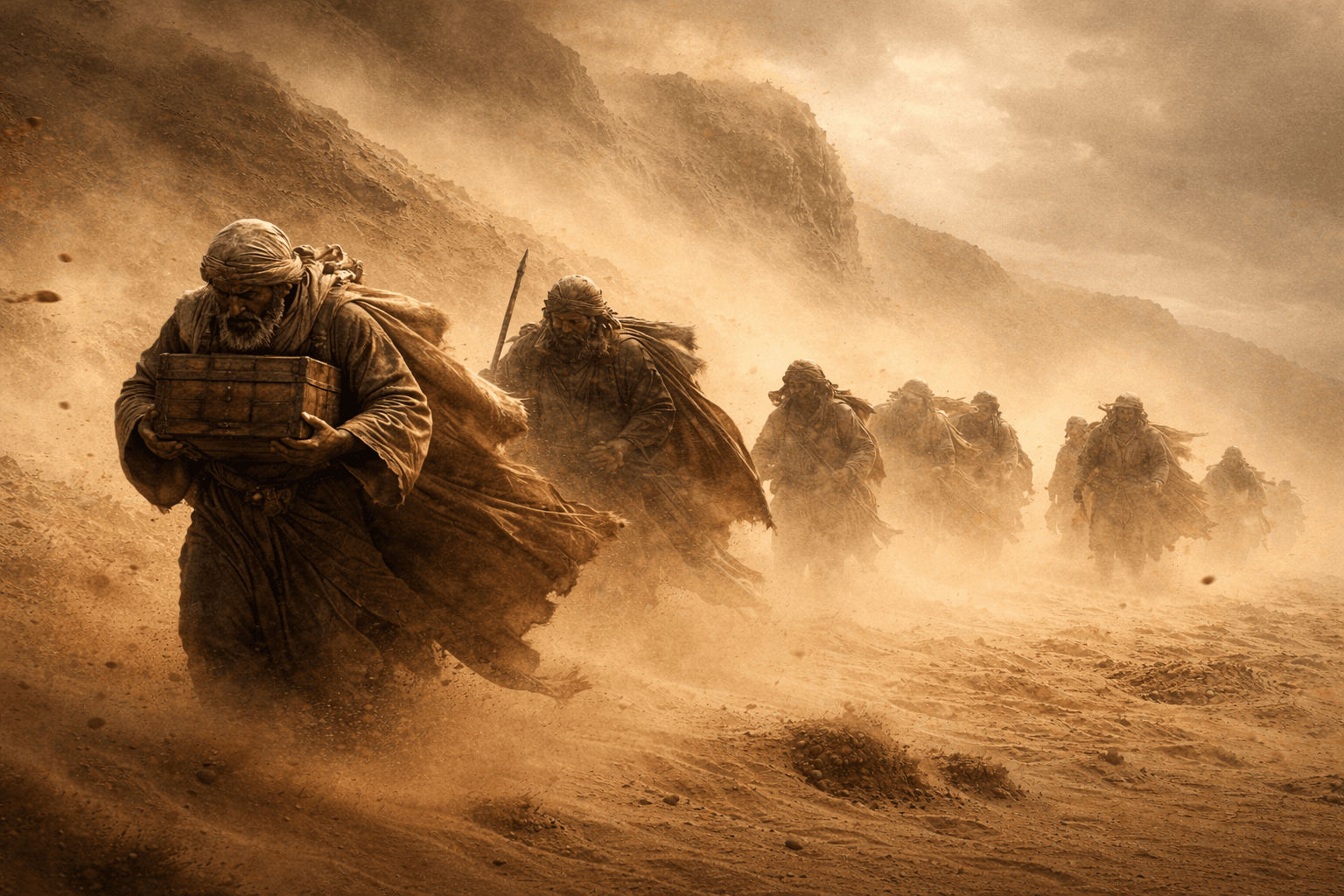
The desert's mood had changed without warning. The sky, clear just minutes before, turned opaque, the air began to burn. The storm was unexpected; it was felt in the body, like a pressure in the chest, as if the world had decided to erase the traces of every inhabitant of the desert.
There were twelve adults and one child. They walked together because to separate was to disappear. They carried empty jugs, thick cloths, and a wooden box filled with tightly packed scrolls. They weren't treasures. They were warnings.
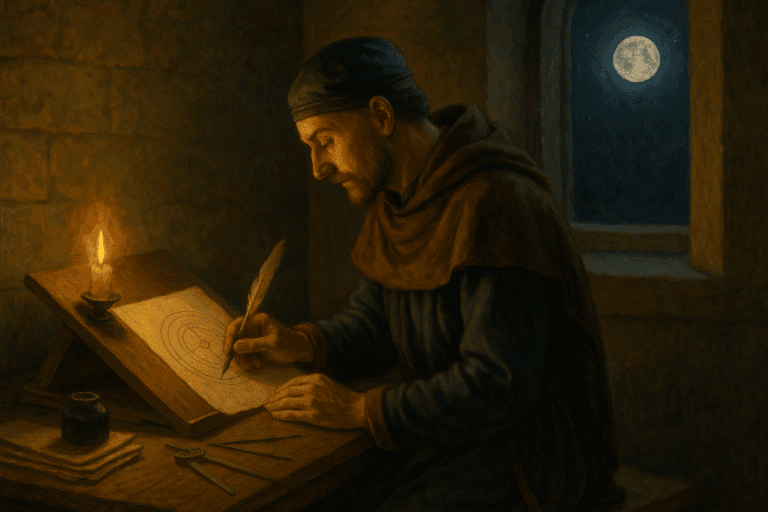
At the front walked Eleazar, the scribe. He had copied texts all his life, but had never written a line of his own. He believed that duty was not to create, but to preserve. Beside him stood Nehor, a former soldier, who knew the language of storms; he knew when to advance and when to halt. Yael silently memorized symbols; if the paper died, someone had to keep them alive.
The boy, Asher, walked on without asking. In times like these, asking doesn't help.
The sand struck first like a fine rain. Then like needles. The wind pushed sideways, tore away voices, bent bodies. There was no visible enemy, only the feeling that the world itself was against them.
"It's not a punishment," Eleazar said, shouting to be heard. "It's a test.".
They covered their faces and carried on. The storm wouldn't last for hours; it would last as long as it took to break them. Amid the noise, Eleazar remembered the phrases he had copied over and over:
Men will come who will speak with certainty.
They will promise peace when it does not yet exist.
They will not attack, they will infiltrate.
Confusion will precede darkness.
They weren't talking about the end of the world. They were talking about the end of clarity, where truth can no longer be distinguished from lies.
A brutal gust of wind snatched a jug from Yael's hands. It rolled away, lost. Nehor fell to his knees and got up again with sand in his mouth. The caravan advanced blindly, guided by habit and by the faith that reaching their destination was possible.
At dawn, the storm subsided without a word. The desert stood still, as if nothing had happened. Before them, the caves: tall, narrow, invisible from below. Eleazar ordered them to stop.
He opened the box. The rolls were still intact.
"This is the message," he said, his voice weary. "There will be no grand signs. Evil will not come shouting. It will come by convincing. The struggle will not be short. And peace… he looked at the child… peace does not come after victory; peace must be awaited.".
They entered the caves and carefully sealed the jars. They were their guardians; they had to secure and protect them for the future. They had to endure.
As they left, Eleazar, Nehor, and Yael stayed behind to make sure everything was truly sealed. Asher did not. He took one last jar, carried it to a higher cave, and hid it with steady hands. No one saw him leave.
Much later, someone would say that those texts spoke of false prophets, of dark days, and of a long struggle before a new beginning. They would also say that not all the scrolls were found. That some were swept away by the wind and disappeared.
Centuries later, a boy looking for a goat would throw a stone.
And the desert would return only part of the message: enough to warn, not enough to close the story.
Because the texts did not announce the end.
They announced how to weather the storm.



 English
  Español
  Français
  Italiano