
Why the war between Iran, Israel, and the United States started… and why many believe it was already predicted
Middle East · Geopolitics · Faith and Meaning
This war didn't start overnight. The current military phase began on February 28, 2026, This occurred when the United States and Israel launched joint attacks against Iran. But what we see today didn't happen overnight: it's the result of a rivalry that has been building for decades, where power, security, religion, energy, and regional control intersect.
To understand what is happening today, it is not enough to look at the latest attacks. We must look back. And, in moments like this, many people also look in another direction: toward prophecies, toward religious warnings, toward the idea that wars do not appear suddenly, but are the consequence of a long political, moral, and human decline.
The root of the conflict: Iran and the United States
The modern enmity between Iran and the United States was consolidated in 1979, with the Iranian Revolution. That year the Shah's regime fell. Mohammad Reza Pahlavi, born on October 26, 1919 in Tehran and dead the July 27, 1980 in Cairo. He was the last Shah of Iran and ruled between 1941 and 1979.
Mohammad Reza Pahlavi was a direct ally of the United States and the West. Under his rule, Iran promoted rapid modernization, especially through the so-called White Revolution, a reform program that expanded infrastructure, education, industry, literacy, public works and economic growth, as well as accelerating the urbanization and westernization of the country.
But that process had another side. The shah ruled in a authoritarian. His regime repressed opponents and dissidents, and was marked by the weight of the SAVAK, the regime's secret police, associated with surveillance, persecution, and repression.
When the revolution overthrew him, it wasn't just a ruler who fell. An entire model of the country collapsed.
The Tehran hostage crisis: the moment everything changed
One of the decisive episodes for understanding the relationship between Iran and the United States was the hostage crisis in Tehran.
After the revolution, the United States allowed the Shah to enter its territory for medical treatment. In Iran, this was interpreted by many as protection for the old regime. In November 1979, Iranian militants and students seized the U.S. embassy in Tehran, captured dozens of U.S. citizens, and held them hostage. 52 hostages for 444 days.
The crisis lasted from 1979 to 1981 and represented a profound humiliation for Washington and a near-total break between the two countries. From that moment on, the relationship ceased to be a mere diplomatic dispute.
Israel and Iran: a strategic, not symbolic, threat
For Israel, Iran is not just an ideological rival. It is a concrete strategic threat.
Israel considers Iran's military program, missile capabilities, technological development, and network of allies in the region to pose a real threat. From the Israeli perspective, the issue is not waiting to see what happens, but rather preventing Iran from reaching a level of military capability that would later prove impossible to contain.
Iran wants to maintain regional power and resist the West.
Israel wants to prevent Iran from becoming a major military threat.
The United States supports Israel and wants to limit Iranian expansion.
That's not a soft interpretation. It's the power structure that organizes the conflict.
The Iranian strategy: regional power without permanent frontal war
After 1979, Iran developed a regional policy based on resisting the influence of the United States and its allies, but without always relying on direct conventional warfare.
Its historical strategy was to expand its influence, deter attacks, and maintain regional weight through alliances, indirect pressure, and military capability. This allowed it to sustain a central role in the Middle East without constantly engaging in direct war with superior powers.
For years, that balance worked. Today, that balance has been broken.
So why did it explode now?
Because an old rivalry has changed phases.
For years there was tension, indirect attacks, covert operations, sabotage, and mutual pressure. What is happening now is different: the conflict has moved from indirect warfare to open warfare.
Israel seeks to neutralize a threat it considers growing and existential. The United States supports this rationale within its regional strategy. Iran responds that giving in would mean losing power, deterrence, and credibility.
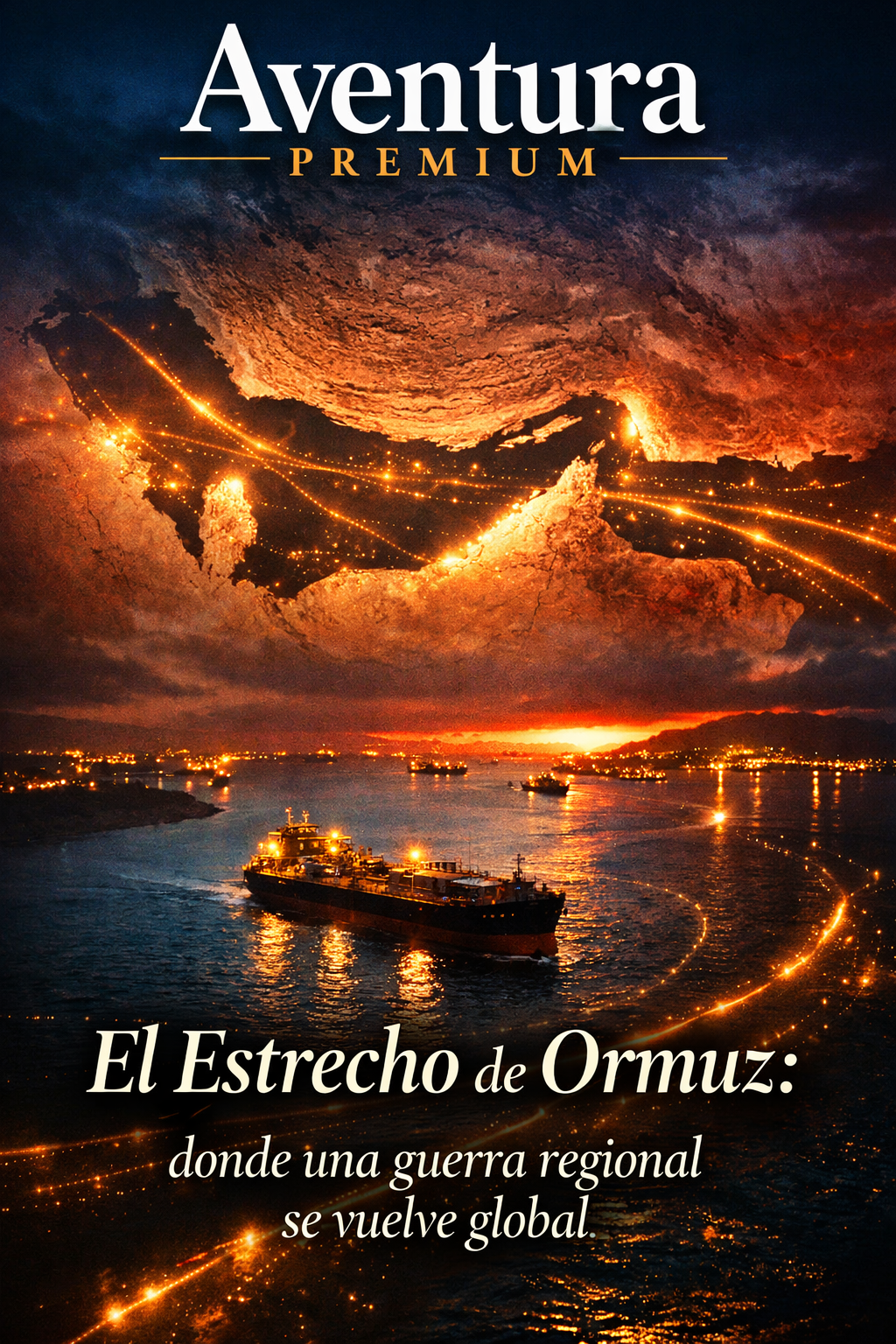
The Strait of Hormuz: why this war is not far off
There is one point that turns this war into a global problem: the Strait of Hormuz.
A significant portion of the world's oil and liquefied natural gas passes through this route. When this route is disrupted, not only does the price of crude oil rise, but so do fuel prices, transportation costs, inflation, and pressure on supply chains.
That's why a bomb doesn't have to fall on Europe for Europe to feel this war. It's enough for energy prices to rise and the economy to start straining.
What is Iran like today, and why it's best not to misrepresent it?
Iran is a Islamic Republic, That is, a system where politics and religion are deeply intertwined and where the law is influenced by a religious interpretation of power and social life.
That has concrete consequences:
- strong political control
- limits to individual freedoms
- significant social restrictions
- particular pressure on women
It is true that oppressive laws and cases of serious repression exist in Iran. It is also true that the country is not a simple caricature: there are educated women, professionals, students, activists, and broad sectors of society that do not fit the monolithic image of the regime.
Why do so many people feel like they don't understand anything?
Because this war mixes too many layers at the same time:
- a historic rivalry between Iran and the United States
- a strategic threat perceived by Israel
- decades of accumulated regional alliances
- energy, oil and shipping routes
- changing political discourses
- religion, identity and historical memory
It's not a simple war. It can't be explained in a single sentence without losing the truth.
When the political explanation falls short
In times like these, people aren't just looking for news. They're looking for meaning.
It's not enough to know who attacked first, what each government's response was, or how the markets reacted. Deeper questions arise: why does humanity always return to these points, why do wars seem to repeat themselves under different names, and whether this type of crisis had already warned of anything.
And that's where the prophecies reappear.
Fatima, Akita, Medjugorje: why they return in times of war
In times of global crisis, many people turn to major religious events. Not because they explain geopolitics like a military report, but because they seem to speak to the human and spiritual underpinnings of conflicts.
Fatima
Fatima speaks of wars, suffering, nations in danger, and the consequences when humanity fails to change course. She doesn't mention Iran or Israel, but she does present a very recognizable logic: when the world deviates from certain limits, conflict escalates.
Akita
Akita uses harsher language, focusing on punishment, destruction, and collective pain. It doesn't describe this specific war, but many people associate it with modern warfare scenarios, devastation, and widespread fear.
Medjugorje
Medjugorje insists above all on peace, on the urgency of change, and on the idea of a world under tension, close to the limit, but still open to a different response.
Lourdes and La Salette
They do not speak directly of the Middle East or of specific wars, but they point to something prior to armed conflict: the loss of meaning, inner disorder, the need for conversion and profound change.
What the prophecies do say… and what they don't say
Here it's important to be precise.
What they don't say: They do not specifically mention Iran, Israel, the United States, the Strait of Hormuz, or this particular war of 2026.
What they do say: They repeat a pattern of wars, collective suffering, tensions between nations, the possibility of disaster, and a humanity that approaches conflict through its own decisions.
These are not maps of the future. They are warnings about human behavior.
The simplest possible explanation
If we had to summarize everything in plain language, it would be like this:
- Iran wants to remain strong and influential in the Middle East.
- Israel wants to prevent Iran from becoming even more militarily dangerous.
- The United States supports Israel and wants to limit Iranian power in a region that is key to its strategy and to global energy.
When these three logics clash at the same time, a specific crisis can turn into open warfare.
That's what's happening.
What this war is not
This war It's not just religion. It's not oil only. It's not just a one-day reaction.
It is a combination of history, security, ideology, geopolitics, energy, and regional balance.
Reducing it to a single cause makes it easier to explain, but less true.
Perhaps the question is not whether someone accurately predicted this war.
Perhaps the question is different.
Why does humanity, time and time again, reach the same point?
Because deep down, we're not just looking for information. We're looking for guidance. We're looking to understand what we feel when the world becomes uncertain.
And that is why, in times of war, many people look again to prophecies: not because they explain a military map, but because they try to explain something deeper.
Not just what happens.
But what we are.
Before the revolution: the women of the Shah's Iran
Before 1979, the lives of many women in Iran were very different. In the big cities, especially Tehran, there was a visible social openness: university education, presence in professions, Western fashion, and an active cultural life.
This historical contrast is important to understand that the country wasn't always as it is today. There was another era, with a different social logic.
Soraya: the story that ended in silence
Soraya Esfandiary-Bakhtiary, the Shah's second wife, became an iconic figure not only for her beauty, but for her deeply sad story.
She was unable to have children, and in a monarchy that meant being unable to ensure the continuity of the throne. The Shah loved her, but he ended up divorcing her for reasons of state.
Her story is not political. It is human. And it shows that even within positions of power, there were losses, imposed decisions, and lives that changed without any possibility of choice.
If you're interested in exploring other stories where culture, history, and personal experience intersect, you can continue reading here:



 English
  Español
  Français
  Italiano