
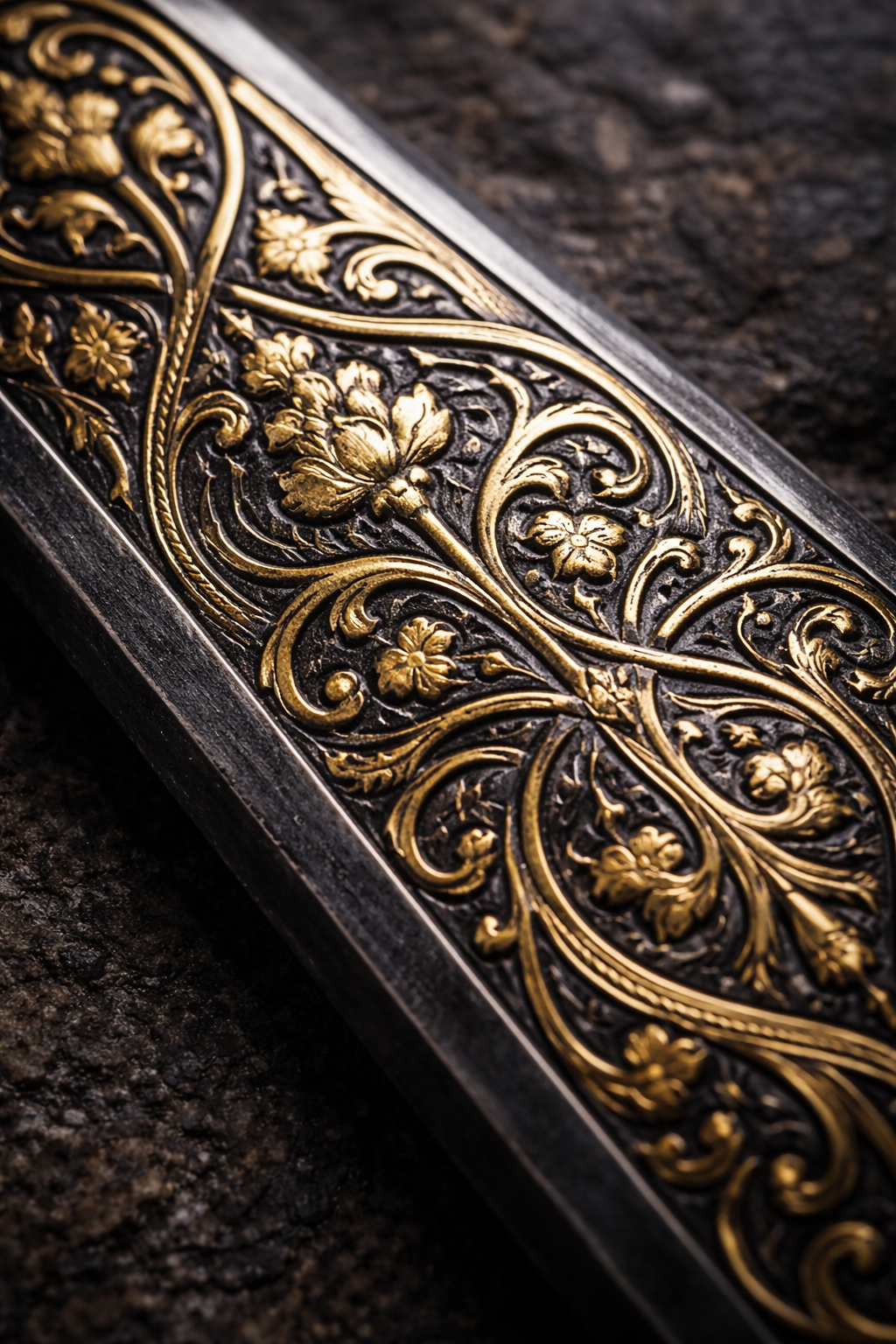
Toledo Damascening: the art of inlaying gold in steel
A highly precise artisanal technique, where extremely fine gold threads transform steel into a surface of light and design.

In Toledo, there is a metalworking art that demands almost microscopic precision. On the dark surface of the steel, artisans inlay extremely fine gold threads to create delicate designs that appear to be drawn with light.
This work is known as damascening, an ornamental technique that combines engraving, patience and enormous manual skill.
The contrast between black steel and the shine of gold produces elegant and surprising pieces: brooches, jewelry, decorative plaques and objects that preserve a tradition deeply linked to the history of the city.
What is damascening?
Damascening is a decorative technique that consists of inlaying gold or silver threads onto a previously engraved steel surface.
To achieve this, the artisan makes small incisions in the metal. These grooves allow the gold threads to be secured with gentle hammer blows.
The final result is recognized by three characteristic elements:
- dark steel as a background
- delicate golden threads
- extremely fine designs
Each piece requires meticulous work that is done entirely by hand.
How to make a damascened piece
The process combines several artisanal stages.
Steel preparation
The metal piece is cleaned and prepared for work.
Engraving of the design
The lines that will receive the gold are drawn with very fine burins.
Precious metal inlay
Gold or silver threads are placed over the engraving and secured with small hammer blows.
Final polishing
The surface is polished until the contrast between the dark steel and the shine of the gold appears.
Damascening and the heritage of the Arab world
The damascening that is known today in Toledo has a deep relationship with the artistic tradition developed in Al-Andalus during the Middle Ages.
For centuries, the Iberian Peninsula was a crossroads of exchange between Christian, Jewish, and Muslim cultures. Within this context, metallurgical techniques, ornamental motifs, and artisanal knowledge from the Islamic world circulated.
The arabesques, geometric designs, and delicate golden lines that appear in many damascened pieces clearly recall that aesthetic heritage.
Toledo, a city marked by centuries of cultural coexistence, ended up becoming one of the places where this technique reached a particularly refined development.
From forging to damascening
The tradition of damascening is closely related to another historical trade in Toledo: steel forging.
For centuries, the city's workshops crafted swords and weapons famous throughout Europe. Once the piece was finished at the forge, some artisans added gold decorations using the damascening technique.
Thus, a piece of steel went from being a functional object to becoming a true work of art.
If you're interested in learning how steel is worked at the forge, you can also read:
Forge your own sword in Toledo: experience in a traditional workshop
How to recognize authentic damascening
An authentic damascened pattern has some clear characteristics:
- The gold is inlaid, not painted.
- the drawing has very fine relief
- the lines are extremely precise
- Each piece shows small variations inherent to the handmade work.
That level of detail is what distinguishes a truly handcrafted piece.
Other artisanal experiences
Crafts, materials and patient gestures that transform matter into memory: from the sound of wood in Cremona to the sweet aroma of marzipan in Toledo.

The sound of wood: following in the footsteps of Stradivarius in Cremona
An experience in the city where wood, varnish and artisanal patience shaped some of the most admired violins in the world.
Read about the experience →
Marzipan workshop in Toledo
Almond, sugar and slow oven: a sweet experience in Chon's workshop, where marzipan continues to be made with expert hands and the aroma of tradition.
Read about the experience →



 English
  Español
  Français
  Italiano