
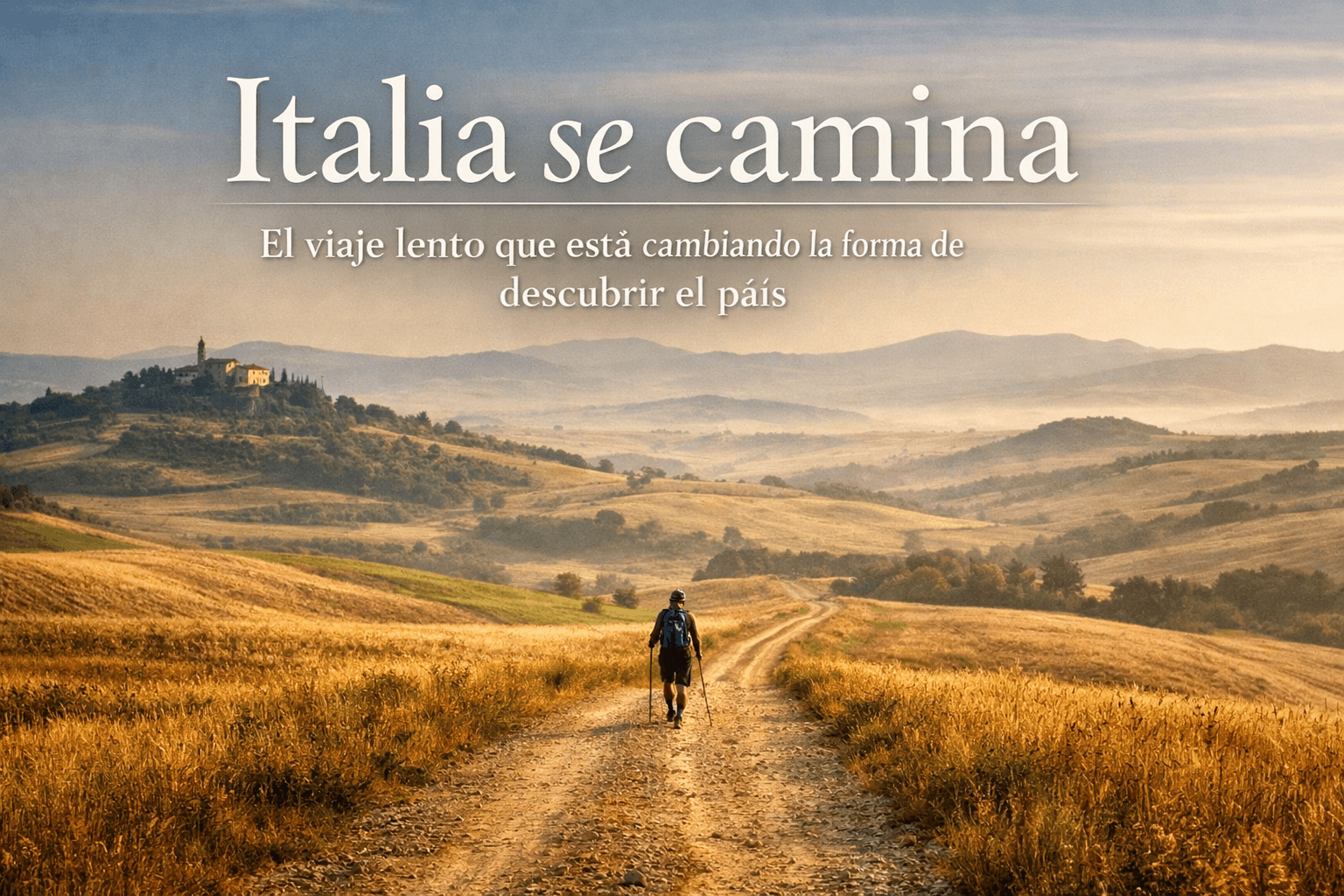
Italy on foot: the slow journey that is changing the way the country is discovered
CAMMINI IN ITALY · SLOW TOURISM
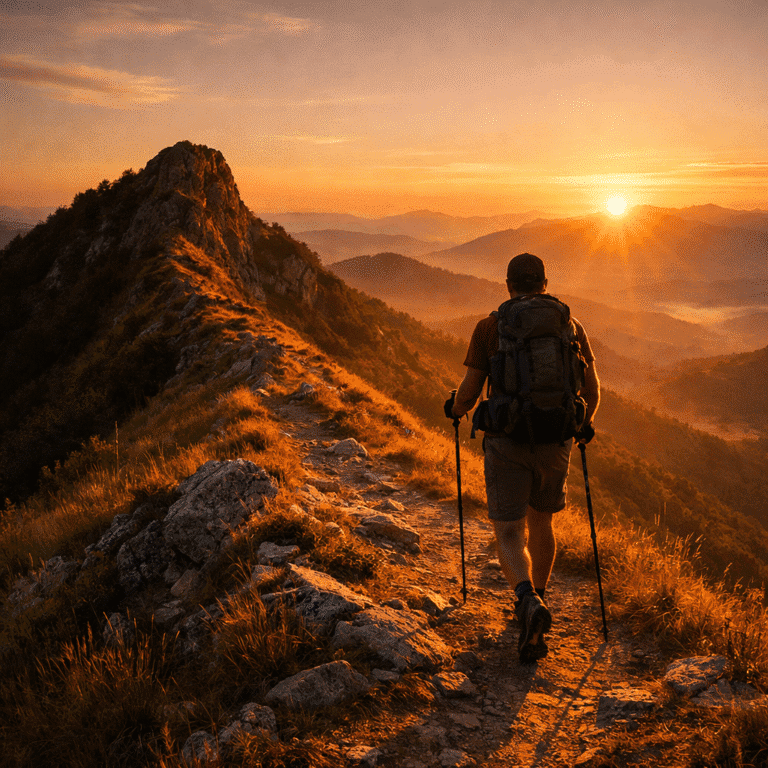
There is an Italy that does not appear in quick itineraries or organized tours: an Italy that is explored slowly, on foot, linking towns, landscapes and encounters.
It's not on the "what to see in two days" lists, nor can it be summarized on a map full of dots. It's a quieter, more intimate, and more vibrant Italy, where the journey isn't just about arriving, but about letting the path set the pace. And more and more travelers are discovering it this way.
Traveling slower, but deeper
Walking isn't simply about changing your mode of transport. It's about changing your relationship with the journey. When you travel on foot, the landscape ceases to be mere decoration and becomes an experience. You listen more, observe more closely, and connect with the local environment in a different way.
- To stop where on another trip you would just pass by.
- Observe carefully what fast tourism often erases.
- To connect with real people, stories, and communities.
- Let the journey happen without forcing it to fit into a schedule.
Perhaps that's why this way of traveling is becoming increasingly appealing. It doesn't promise speed, but presence. It doesn't propose accumulating places, but inhabiting them.
A network of roads that crosses all of Italy
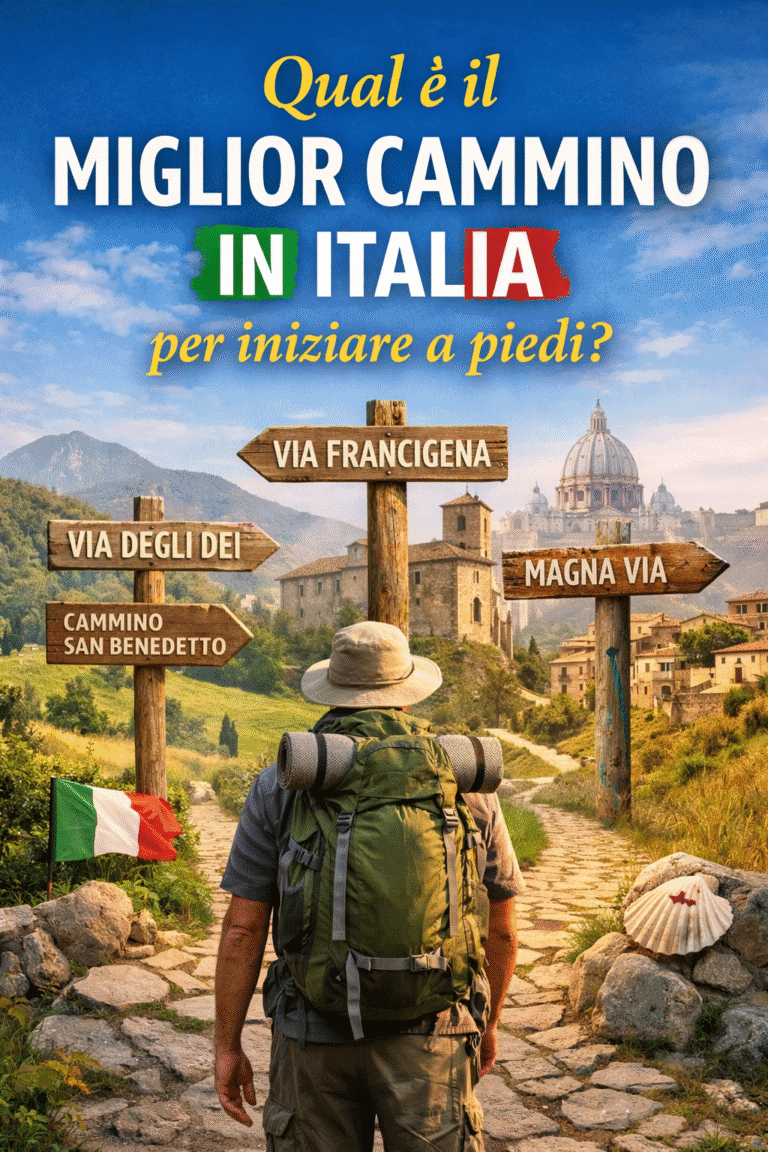
Italy is crisscrossed by a network of routes that connect very different regions, cultures, and landscapes. Some follow historical paths; others arise from local initiatives or revive ancient routes through hills, monasteries, villages, and fields. Many traverse territories that rarely appear on the radar of conventional tourism, and therein lies much of their charm.
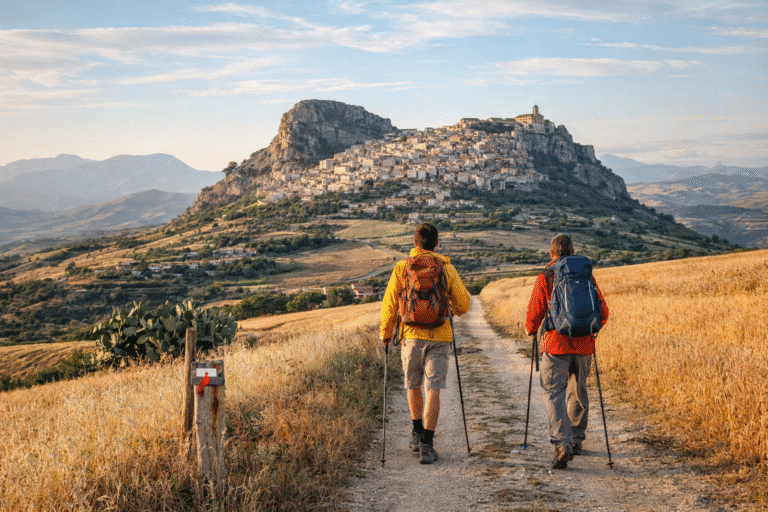
Magna Via Francigena
A journey through the heart of Sicily where the landscape changes with each stage and time seems to expand.
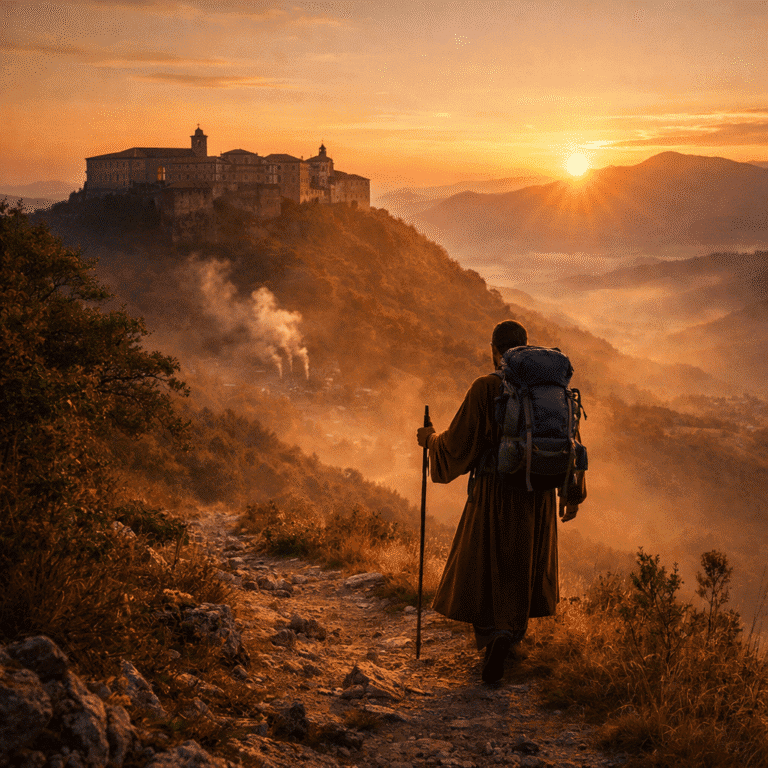
FLORENCE · ASSISISt. Francis Way in Italy
A route that unites art, spirituality and nature in one of the most evocative cultural tours in the country.
GUIDE / HUBCammini and cultural itineraries in Italy
A gateway to discover different routes and choose the one that best suits your travel style.
What traditional tourism does not show
Walking changes the map. Those who travel on foot don't just see the big names: they enter villages where tourism barely touches, discover trades and living traditions, sleep in small family-run accommodations, and eat in places where the flavor of the land is still preserved.
The journey then ceases to be a series of purchases and becomes a more direct, more human, and more concrete experience. Sometimes, the most memorable thing isn't the grand monument, but a conversation, an empty square at sunset, or a landscape that appears around a bend. The algorithm doesn't understand it; your legs do.
The value of small things
One of the most interesting aspects of this type of tourism is that it doesn't concentrate everything in just a few cities. It's spread out. Each hiker activates a chain of small economies: a hotel, a restaurant, a shop, a village bar, a local service. Step by step, the trail sustains areas that often remain outside the mainstream.
This distributed dimension is also one of its greatest strengths. It doesn't invade, it accompanies. It doesn't devastate, it leaves its mark gently. And that's precisely why it's so valuable to so many areas of the country.
Who chooses this type of trip today?
It's no longer just about the classic pilgrim profile. Today, very different people walk the pilgrimage route: curious travelers, nature lovers, those who need to disconnect, those seeking a deeper cultural experience, or those who simply want to experience Italy in a different way.
Many arrive at the cammini without ever having imagined taking such a journey. And yet, they discover that walking allows them something that other forms of activity no longer provided: time, attention, and meaning.
Walking transforms the experience
Something changes when the body finds its rhythm. Distances take on a different dimension, landscapes are perceived differently, and encounters become more intense. Walking isn't just about slowing down: it's about seeing things differently.
That's why these trips often leave a different kind of memory. They're remembered not only for what was seen, but also for what was felt between one stage and the next.
Where to begin?
To connect with this world, you don't need to seek out the most famous or the most demanding route. Sometimes it's enough to choose a path that resonates with you: a journey through Sicily, a Franciscan route, a cultural itinerary among villages and hills. What matters isn't always the destination, but what happens between each step.
If you want to explore this way of traveling, you can start with the Magna Via Francigena, to explore the St. Francis Way in Italy or discover more options in the hub of Cammini and cultural itineraries in Italy.
Explore routes, ideas and experiences to discover a slower, more authentic and deeper Italy.
See cammini in Italy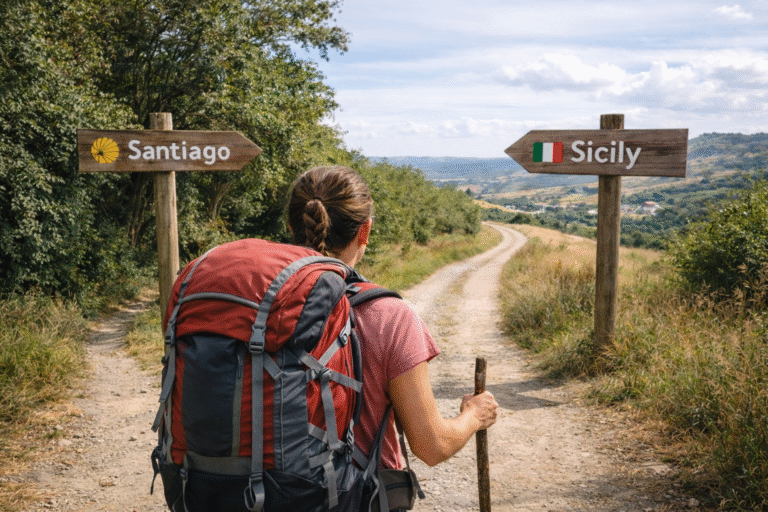
 English
  Español
  Français
  Italiano