
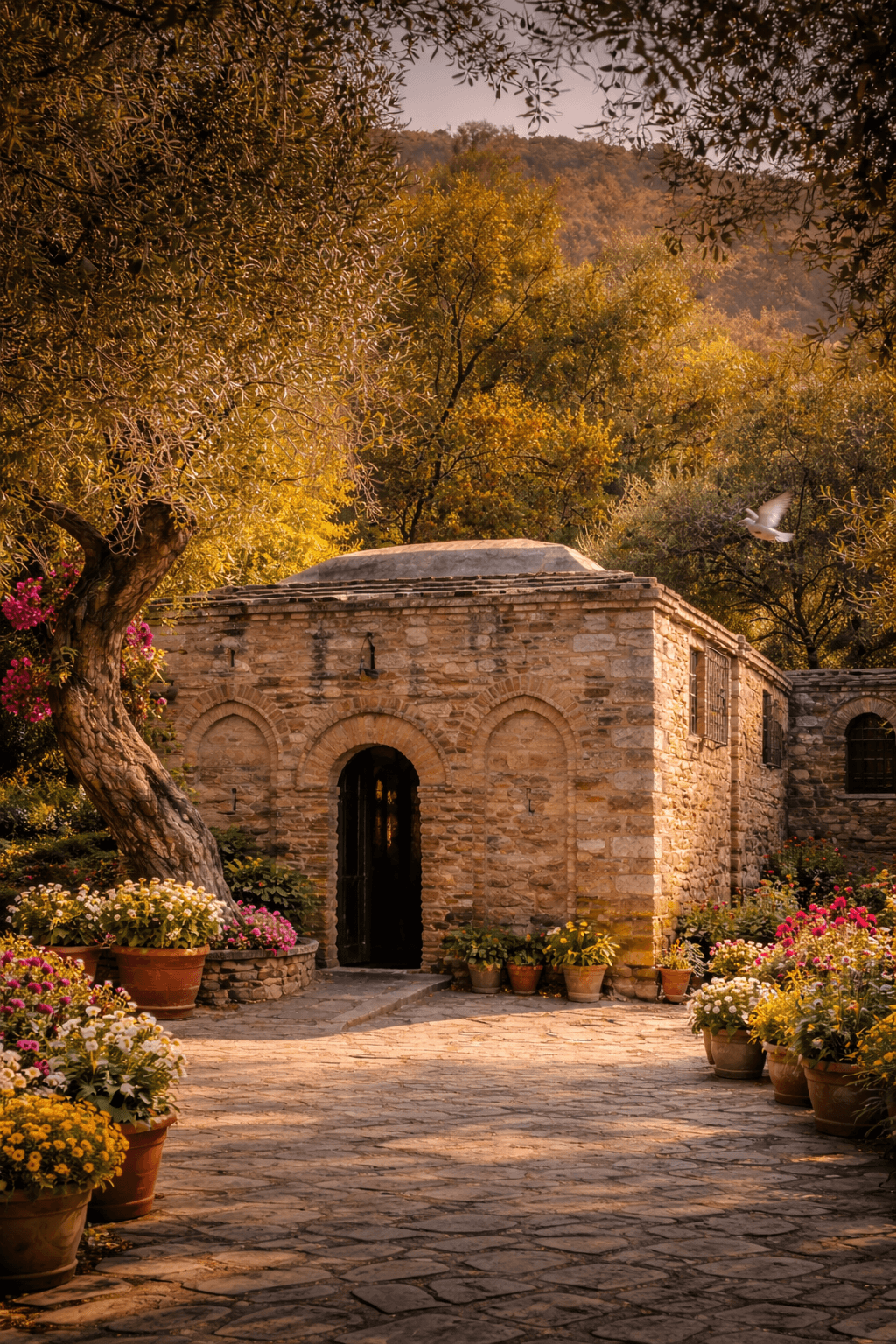
The last house of the Virgin Mary in Ephesus
A small house in the hills of Ephesus and the mystery of Mary's last years
In the hills surrounding Ephesus, the air seems to hold more than just wind. It's not merely the landscape, the pine trees, the dirt paths, the golden light falling on the ancient stones, but a feeling difficult to name: the impression that memory inhabits the place.
For centuries, an ancient Christian tradition held that Mary, the mother of Jesus, spent her final years away from Jerusalem, accompanied by the apostle John, near Ephesus. Not necessarily in the heart of a monumental city, but in its outskirts, in a more secluded setting, consistent with a quiet life.
Ephesus was no ordinary place. It was one of the most influential cities in the Roman world of Asia Minor: a strategic port, a commercial center, and a cultural and religious hub. Temples, trade routes, languages, and ideas all converged there. And, in time, it also became home to one of the earliest and most important Christian communities in the eastern Mediterranean.
The Bible doesn't mention a house. It doesn't point to a specific city. But it leaves a crucial clue: Mary is placed under John's care. In the Gospel, the moment is brief and decisive.
“There’s your mother.”.
And from that hour the disciple took her into his home. (John 19:26–27)
The text doesn't give coordinates. It doesn't say "where." But it forever links Mary's destiny to John's. And ancient Christian sources, predating the Middle Ages, place John in Ephesus during the last years of his life, a key city for the early Christian communities of Asia Minor.
Therefore, long before any discovery, there was already a belief that Mary had lived in or around Ephesus, accompanying John. Not as an archaeological certainty, but as a tradition consistent with the logic of the Gospel narrative.
That silence in the Bible left an open space. A space where tradition attempted to fill in what the sacred text did not narrate: what those last years were like, far from the center of events, far from Jerusalem, perhaps in a life more secluded than we usually imagine.
Anna Katharina Emmerick and the Language of Visions
In the 19th century, a German Augustinian nun, Anna Katharina Emmerick (1774–1824), claimed to have had intense and detailed visions of the lives of Jesus, Mary, and the early Christians. Her story is well-documented in modern historical sources, such as the Encyclopaedia Britannica, which includes her biography and the context of her experiences.
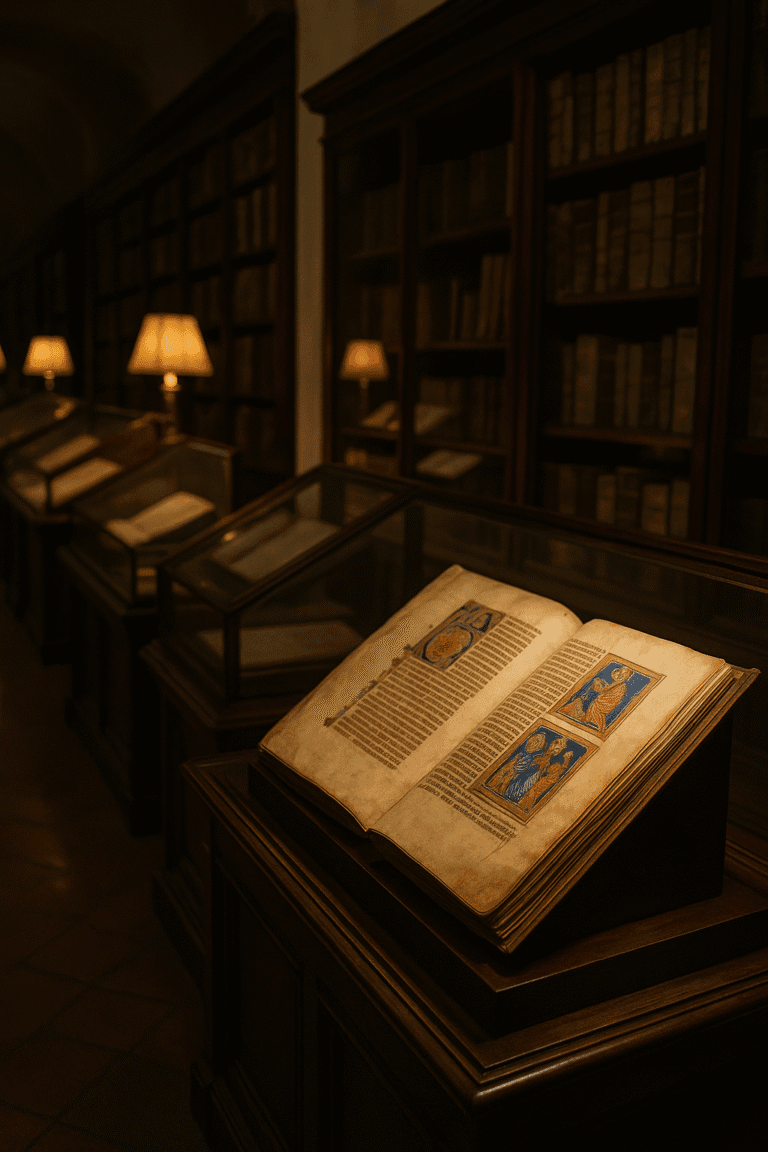
Emmerick left no writings of his own. His visions were recounted orally and collected by the German poet Clemens Brentano, who organized and published them after his death in works such as The Life of the Virgin Mary. This is key: these are not historical documents in the strict sense, but visionary narratives imbued with spiritual and literary sensibility.
Even so, there is one element that continues to attract the attention of even the most skeptical readers: the descriptive accuracy.
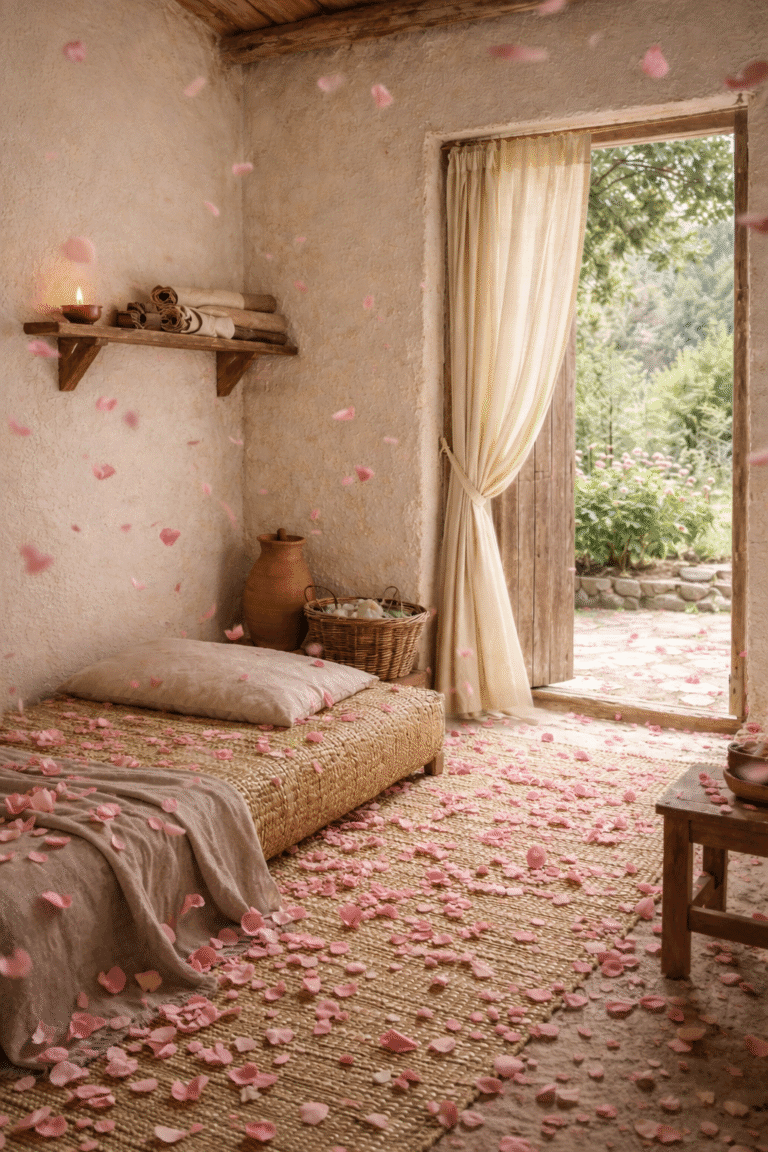
These accounts describe a stone house on a hill, surrounded by vegetation, not far from Ephesus. They mention paths, slopes, the orientation of the site, and the simplicity of the interior. Mary lived there with the apostle John, far removed from the center of events.
For decades, these texts were read exclusively as mysticism. As symbolism. As an inner language. No one thought of turning them into a map.
Bible, tradition and a concrete possibility
The Gospel doesn't specify a location. But early Christian tradition, passed down for centuries, placed John in Ephesus. This connection, between the Gospel and tradition, opened up a possibility: that Mary might also have lived there, or very nearby, accompanying the one entrusted to her care.
This is no small detail. If we accept this care as a real bond, Maria's destiny ceases to be an abstraction: it becomes a concrete life, dependent on a companion on her journey, in a foreign territory, in a nascent community.
And that is why, long before Emmerick's visions, this belief already existed: not as proof, but as continuity. The silence of the sacred text did not close the story. It left it open.
An unexpected search in the 19th century
At the end of the 19th century, in what was then the Ottoman Empire, lived Marie de Mandat-Grancey, a French nun and superior of a hospital in Smyrna. She was well acquainted with both the tradition linking Mary to Ephesus and the visionary texts attributed to Emmerich.
In 1891, together with Lazarist priests, he made an unusual decision: to physically search for the place described in the visions.
Following only those descriptions, they climbed the hills near Ephesus. They weren't looking for a church or a sanctuary. They were looking for a house. A simple, domestic structure that might have housed a life of seclusion.
The discovery in the hills of Ephesus
What they found were the ruins of an ancient stone structure, consistent with an early Roman dwelling. Not a temple, not a monument, but something simple and domestic: walls, shape, remains that spoke of a room, not of grandeur.
The coincidence was striking: the location, the surroundings, the orientation, and the simplicity all matched the visionary account. Furthermore, there was no prior record indicating that the site was significant. No one was looking for it. No one was expecting it.
The site was studied, restored, and eventually became known as the House of the Virgin Mary (Meryem Ana Evi). Today it is an officially recognized pilgrimage site, visited by several popes throughout the 20th century, as documented by historical and tourist sources specializing in Ephesus and its surroundings.
A possible place for Maria's final years
None of this allows us to state with absolute certainty that Maria lived in that exact house. Archaeology cannot conclusively prove it. There is no inscription that says so. There is no definitive proof that settles the debate.
But in light of the Gospel, early Christian tradition and the discovery in the hills of Ephesus, it is plausible that Mary lived there or very close to it, accompanying the apostle John, in a secluded place, consistent with a withdrawn life.
Perhaps he lived in that house. Perhaps in another very similar one, in those same hills. The crucial point is that the possibility is no longer abstract.
The idea that Mary's final years were spent in Ephesus ceased to be merely a tradition when a real place emerged that fits that narrative. A place that doesn't prove, but suggests. That doesn't impose, but invites.
And, in history, sometimes that's as close to the truth as you can get.

 English
  Español
  Français
  Italiano