
🌲 FOREST BATH (SHINRIN-YOKU) - MOUNT FUJI, JAPAN
To walk in silence is to listen to yourself again
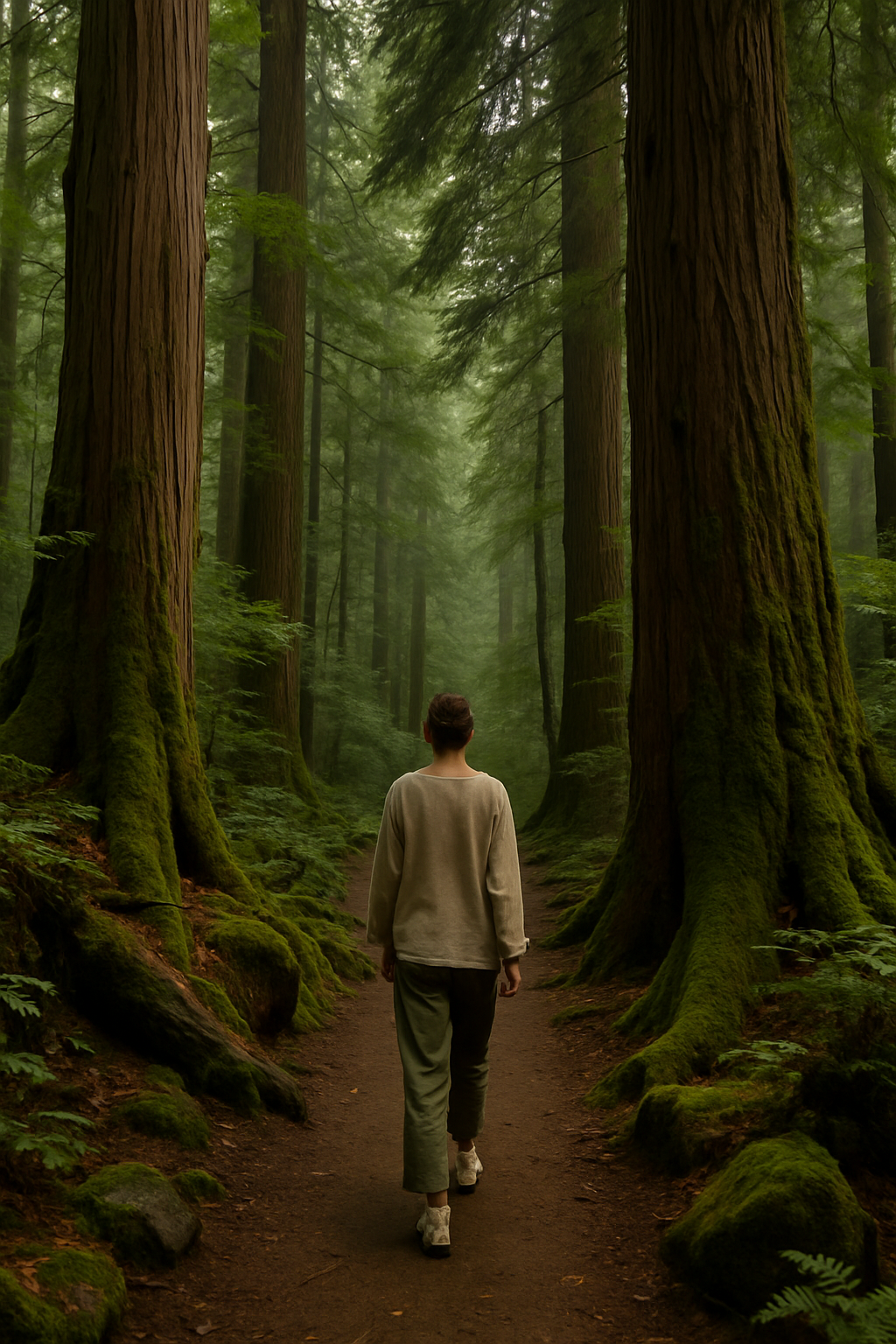
At the foot of Mount Fuji, in a forest of ancient cedars where the mist slips between the branches like a whisper, the ritual begins Shinrin-Yoku. There is no rush, no goal. Only the art of being: walking slowly, stopping, letting the sounds of the forest gradually replace the inner noise.
Forest bathing, a Japanese practice that originated in the 1980s, invites a deep sensory connection with nature: observing without judgment, breathing mindfully, touching the bark of a tree as one touches a memory. It's not about reaching a viewpoint or covering kilometers, but about sharpening the senses: the smell of damp earth, the light filtering through the leaves, the crunch of branches underfoot.
Led by certified instructors, the walks are conducted in small groups or privately, and require no physical exertion, only presence. For two to three hours, leisurely walks alternate with moments of stillness, breathing exercises, and brief silent meditations. Sometimes, participants are invited to write a few words, close their eyes for a few minutes, or choose a spot in the forest to simply sit and listen.
The experience is available in English or Japanese (with the option of prior translation into Spanish upon request). It is especially recommended in spring and autumn, when the forest glows in soft greens or golden and reddish hues. Comfortable shoes, clothing appropriate for the season, and a willingness to disconnect from your phone throughout the activity are suggested.
Many people describe forest bathing as a kind of "pause button" in the middle of a trip: a moment to slow down, sleep better, breathe more deeply, and return to the rest of the journey with a renewed sense of focus. It's an ideal option for adults of all ages, whether they already meditate or have never tried this type of practice.
You can read more about The history and benefits of Shinrin-Yoku in Japan , where its origins, its relationship with health and its expansion to other countries are explained.
If you're drawn to Japanese rituals that combine calm, beauty, and mindfulness, you can continue exploring experiences like the tea ritual at a temple in Tokyo , wave Japanese cooking ceremony ,where every gesture, every silence and every ingredient are part of the same language: that of living in the present with all the senses.
 English
  Español
  Français
  Italiano