
Prizzi at Easter: the Ballo dei Diavoli, inner Sicily and a medieval ritual
🎭 Prizzi, Inland Sicily: Where Easter Becomes Living Theatre
Prizzi, Inland Sicily: Where Easter Becomes Living Theater
📍 Prizzi — Mountains of the province of Palermo
📌 Where exactly is it?
Prizzi is not by the sea.
It's located in the mountainous interior of Sicily, at an altitude of about 1,000 meters, in the province of Palermo. The landscape here isn't one of turquoise beaches but of:
- Rolling hills
- Wheat fields
- Constant wind
- Rural silence
It's a rougher Sicily. More authentic.
It takes approximately 1.5 hours by car from Palermo. Public transport is limited. It's best to get here by car.
🏘 What is the town like?
Prizzi is neither a baroque setting like Noto nor a coastal postcard like Cefalù.
It's a town of light-colored stone, narrow streets, and a slow pace of life. It has something austere about it. Something ancient.
Its layout preserves medieval roots and a strong rural identity.
It's not just one of "so many" towns. It has character.
Here, Easter is not a tourist spectacle: it is a community ritual.
🏛 Roots of the population and cultural footprints
The interior of Sicily was inhabited from very ancient times by local populations, predating the arrival of the Greeks and Romans. Greek influence was strongly felt on the island (especially in coastal areas), but in inland towns like Prizzi, the identity was formed through successive historical layers.
Over the centuries, Sicily has integrated indigenous heritages, the Roman period, and, in the Middle Ages, the weight of Arab and Norman rule, in addition to later influences. This layering helps to understand the rural character of the interior and certain forms of popular religiosity.
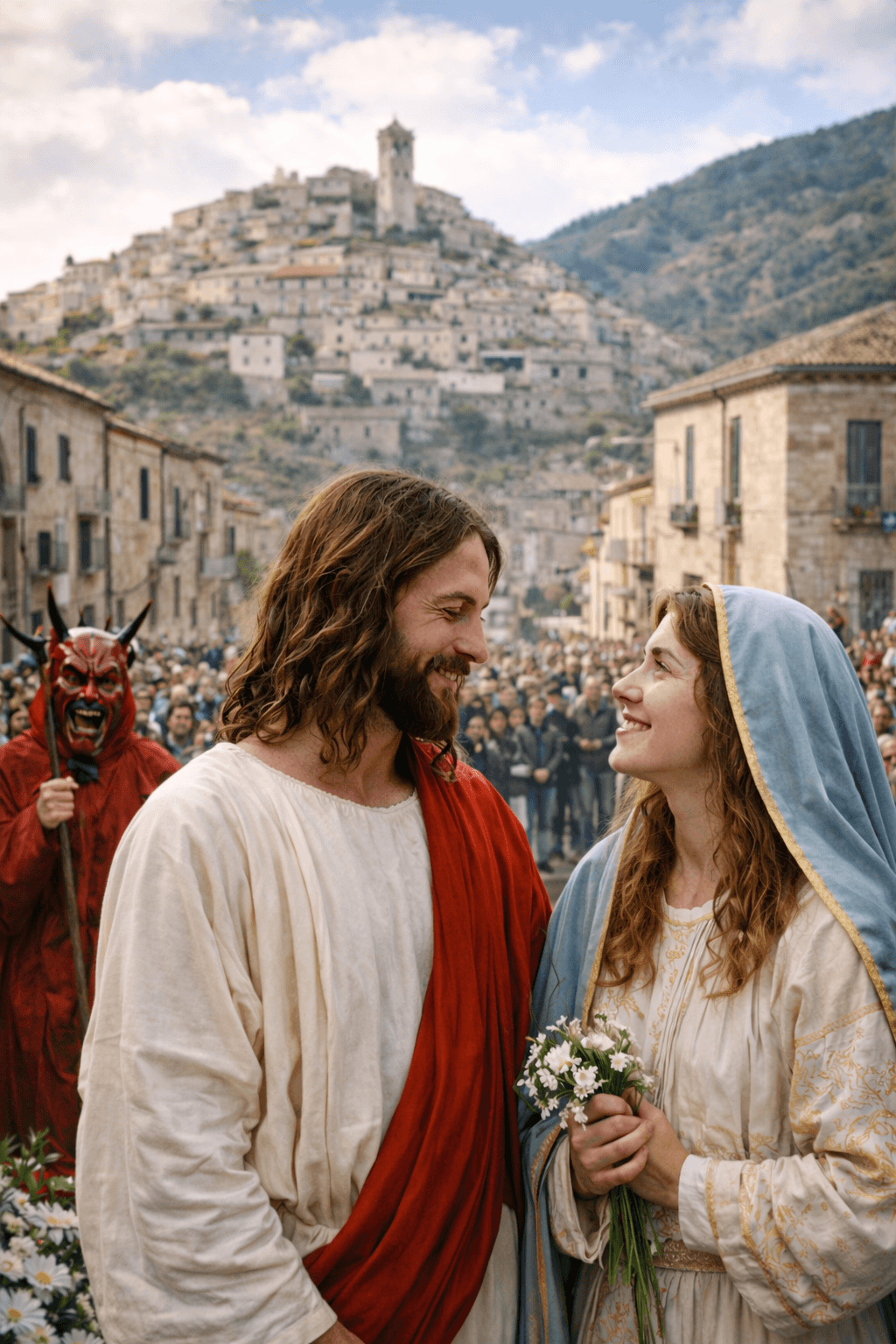
In traditions like the Ballo dei Diavoli, one can perceive a theatricality characteristic of medieval and baroque popular Christianity: the public dramatization of good and evil, the community as protagonist, and the urban space transformed into a stage.
🎭 The Ballo dei Diavoli (with another light)
Yes, devils are impressive.
But the truly moving moment is the encounter between the resurrected Christ and the Virgin Mary. The square fills up. There is silence. And when the encounter takes place, the whole town breathes a sigh of relief.
It's not just dramatization. It's collective catharsis.
🍞 What's the food like at Prizzi?
We're in inland Sicily. The cuisine here is:
- Rustic bread from a traditional oven
- Sheep cheeses
- Artisan sausages
- Dishes with wild fennel
- Pasta with a simple but intense sauce
During Easter, traditional sweets appear such as:
- Cuddure (sweet bread decorated with egg)
- Almond pastry
It's not sophisticated cuisine. It's country cooking.
🎶 Other traditions
Besides the Ballo:
- Solemn processions
- Traditional religious chants
- Clothing that combines baroque and popular styles
- Active participation of the inhabitants (not external actors)
Tourism is moderate. It's not massive. It increases during Easter, but it remains primarily regional.
You won't find hordes of buses.
🌄 Landscape and atmosphere
The landscape here is agricultural and mountainous. In spring, the fields turn green and golden.
It is a Sicily different from the one in the tourist imagination.
Quieter. Rougher. More human.
🛏 Where to stay?
Options:
- Small family-run B&Bs in the center.
- Farm stays in the nearby hills.
- Rural houses.
There are no large chain hotels.
And that's part of the charm.
🇬🇧 English Version
📍 Where is Prizzi?
Prizzi is not by the sea.
It lies in the mountainous inland of Sicily, about 1,000 meters above sea level, in the province of Palermo. The landscape here is made of rolling hills, wheat fields and rural silence.
It is a harsher, less polished Sicily.
From Palermo, the drive takes about 90 minutes. Public transport is limited; a car is recommended.
🏘 What is the town like?
Prizzi is not baroque elegance like Noto, nor coastal beauty like Cefalù.
It is a stone-built mountain town with narrow streets and a strong rural identity. Its medieval layout is still visible.
It feels authentic, not curated.
🏛 Roots and cultural layers
Inland Sicily has been inhabited since very ancient times by local populations that predate Greek and Roman rule. Greek influence shaped much of Sicily (especially the coastal areas), but inland towns like Prizzi developed their identity through successive historical layers.
Over the centuries, Sicily absorbed indigenous heritage, the Roman period and, in the Middle Ages, strong Arab and Norman presence, alongside later influences. This long overlap helps explain the rural character of the interior and forms of popular religiosity.
In traditions such as the Ballo dei Diavoli, the theatrical language of medieval and baroque popular Christianity is visible: a public staging of good and evil, the community as protagonist, and the town itself turning into a stage.
🍞 Local cuisine
Expect rustic bread, sheep's cheese, simple pasta dishes, fennel, local meats and almond pastries during Easter.
This is countryside cooking. Honest and seasonal.
🎶 Beyond the Devils
- Solemn processions
- Traditional religious chants
- Community participation
Tourism exists, but remains modest and mostly regional.
🌄 Landscape
Spring turns the hills green and gold. Wind moves through wheat fields. Silence dominates.
This is a different Sicily.

 English
  Español
  Français
  Italiano