
What does happiness smell like?
It surely smells like sitting in front of a fireplace in winter, the air filling with the aromas that come with the cold: wood warmed by the fire, roasted chestnuts, sweets, and cinnamon. Gentle breezes that evoke places and sensations. They don't promise absolute happiness, but rather moments that are possible.
A myriad of notes from citrus, flowers, and fruits combine to create not just a classic perfume, but unique experiences. Rain, wet earth, leather, libraries, old bars, smoke, the sea, damp vegetation. A single scent can transport us to a jungle, a train crossing the Scottish Highlands wrapped in tartan, a Moulin Rouge-style bar, or the seaside, all without leaving our seats.
Some evoke childhood.
They smell like dolls. Like a doll from another era, with a scent that's hard to define: warm plastic, milk, a hint of bergamot and mandarin. A smell that takes us far back in our memories. Happiness, without a doubt, smells a little like this.
And it also smells of sweets: cakes, candies, chocolate, gourmand fragrances. Not as something edible, but as comfort. As a reward. As that immediate feeling of being safe for a moment.
Others find happiness in a creation whose notes transport us to a warm, golden-sand beach. There, the scent lingers with hints of lemon, pink pepper, coconut milk, and a gentle breeze of ylang-ylang. Coconut appears again and again because it encapsulates a simple yet powerful idea: relaxation, sun-kissed skin, carefree abandon.
Some perfumes create interiors.
A jazz club: leather, tobacco, rum or whiskey, worn armchairs, low lighting.
A fireplace: burning wood, chestnuts, cognac, autumn.
A library: old paper, waxed wood, silence.
An afternoon tea.
A bubble bath: aldehydes, rose, white musks, coconut.
Old-fashioned barbershops also tell their story: lavender, tobacco, woods, patchouli, orange. Ritual, care, a firm calm.
And the sea, in all its possible versions: seaweed, marine notes, ozonic accords. Sometimes clean and luminous; other times, damp and green. The same sea, different emotions.
These fragrances don't describe: they transport.
They function like small emotional time and space machines. They don't recreate reality as it was, but as it was felt.
All of this is deeply linked to a contemporary search for minimal stimuliSmall experiences that allow us to access other states of well-being. Brief, portable, almost invisible pauses.
So, how many versions of happiness can there be?
Probably infinite.
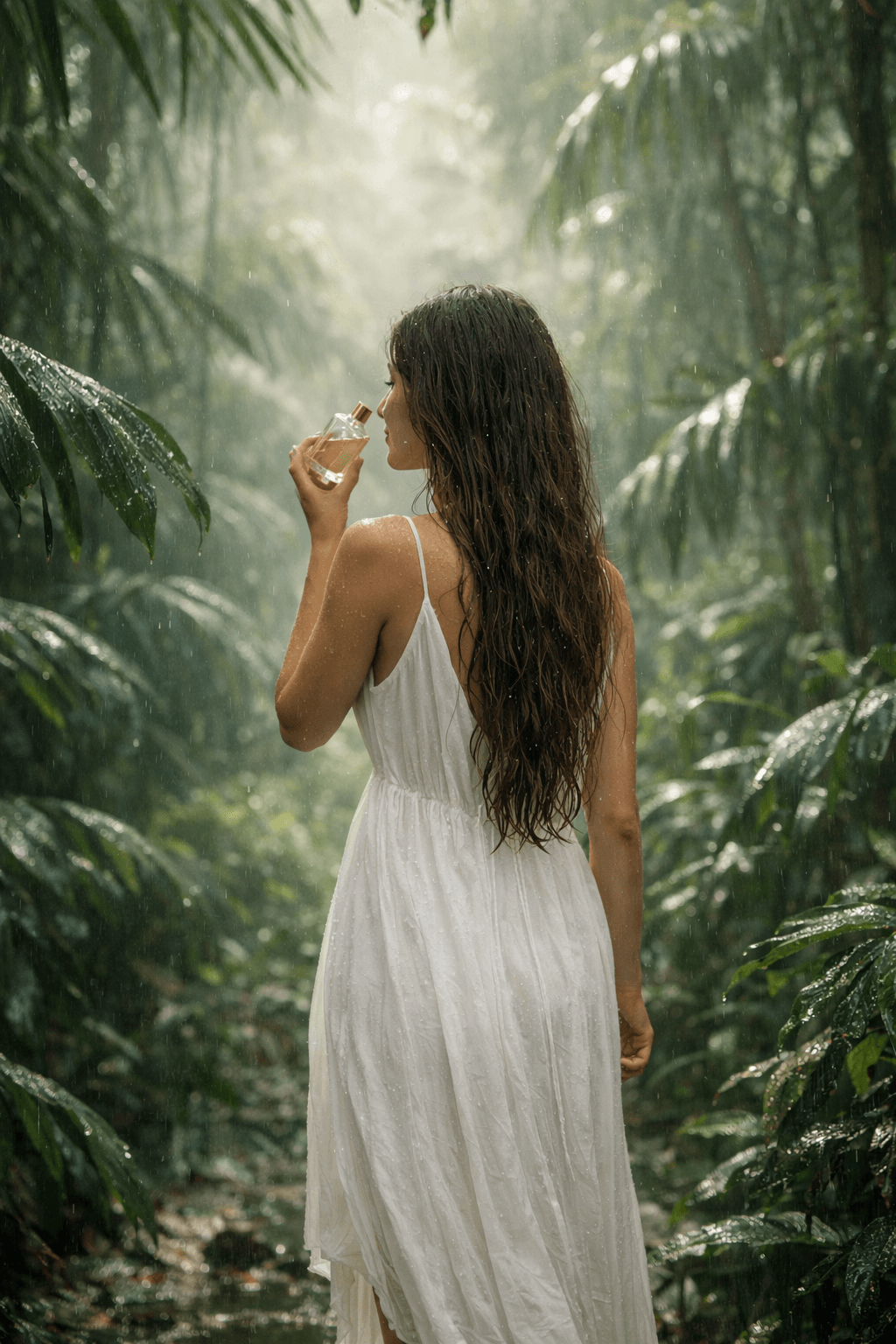
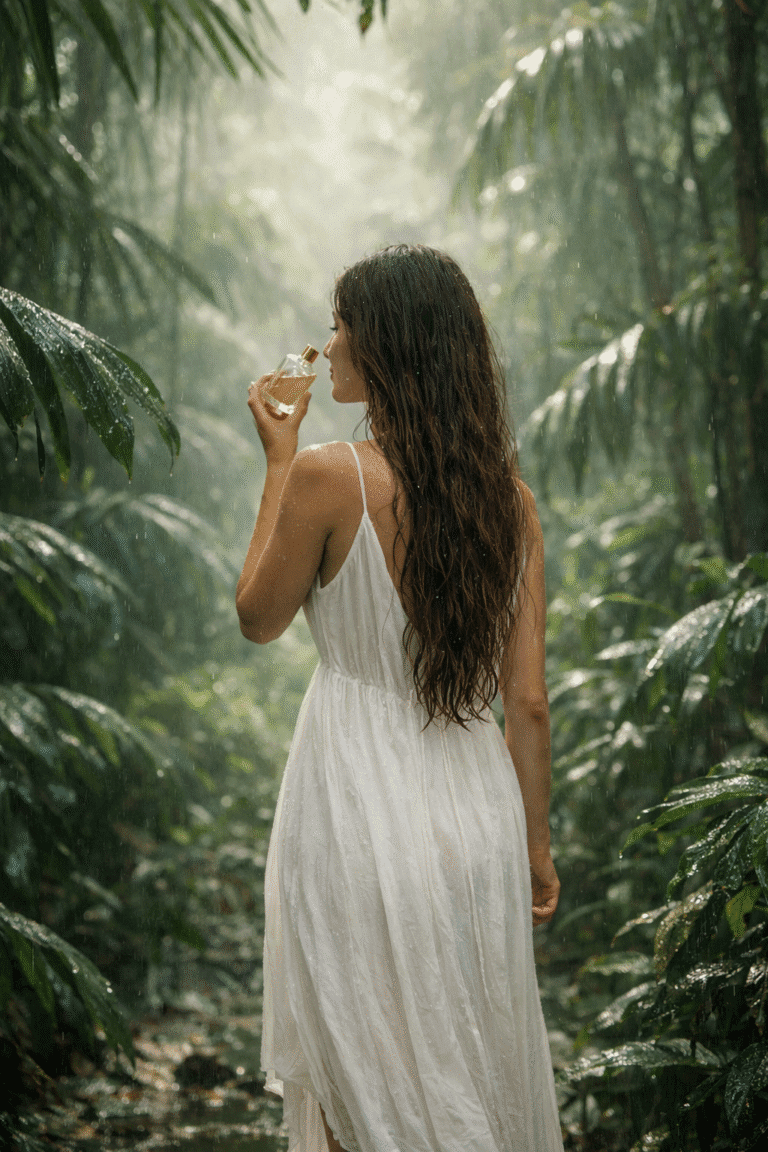
One of my favorites smells like damp earth in the jungle. Like humid greenery. Like a calm paradise after the storm. Deep, green, vegetal notes. There's no euphoria there, but rather balance. A quiet, breathable happiness.
Because happiness is not a formula.
It's a scent that, for a moment, takes us to the right place.
Much more than a good fragrance
There are scents that are much more than just a good fragrance. They erase physical space and immerse us in other, more subtle, boundless states—mental and emotional ones.
A pleasant aroma can transport us to an extraordinary state, an invisible place where everything seems to be in balance. It's not permanent happiness, nor the promise of anything transcendent. It's something simpler, and therefore, more valuable: immediate well-being.
Like a good meal.
Like a flowing conversation.
Like those little pleasures that don't change your life, but make it better for a while.
Perhaps that's why we talk about perfumes as if they were something more than just an object. Because, in a way, they are.
Aromas, not smells
There are words that ruin the experience. They work perfectly for certain things—the smell of dampness, the smell of burnt wire, the smell of socks on strike—but not for talking about pleasure.
When we enter the territory of the sensory, of enjoyment, of well-being, language changes on its own.
It's not a matter of correctness or artificial sophistication. It's precision.
When something gives us pleasure, we look for other keys: aroma, fragrance, notes, trail.
We don't talk about smells when we talk about what we want to remember, repeat, inhabit.
Aromas and memory
Aromas enrich life because they activate something that doesn't first pass through reason. The sense of smell is directly linked to memory and emotion.
That's why a scent evokes memories before an image.
That's why, sometimes, a single note is enough to make an entire scene appear.
None of this is accidental. Each fragrance evokes different associations. Choosing a perfume isn't just a matter of taste: it's a way of engaging with one's own history, with memories we sometimes didn't even know were still there.
Aromatic families: how what we feel is organized
Floral. Fragrances based on flowers such as rose, jasmine, iris, orange blossom or tuberose, which interpret their facets —fresh, powdery, creamy or intense— to build sensations rather than landscapes.
Wooded. Dry, damp, creamy, or smoky woods: sandalwood, cedar, vetiver, patchouli. They convey stability, depth, and silence.
Orientals / amber. Spices, resins, vanilla, balms. They are enveloping, warm, sensual. They smell of interiors, of night, of skin.
Gourmand. Fragrances based on sweet and edible notes that appeal to sensory pleasure and emotional memory, with a warm, enveloping and addictive character.
Greens. Leaves, sap, cut grass, damp vegetation. They smell of life in motion, of clean air after the rain.
Aquatic and marine. They evoke water, breeze, salt, ozone. They don't always smell like the actual sea, but rather like a feeling of freshness and spaciousness.
Citrus fruits. Bergamot, lemon, mandarin, orange. Bright, brief, energizing. They work like an open window.
The notes: how a perfume unfolds over time
Exit notes. The top notes are the first to be perceived when the perfume touches the skin and dominate the first few minutes, generally between 0 and 10 minutes, though they can last up to 15 minutes. They are composed of volatile ingredients such as bergamot, lemon, mandarin, grapefruit, or bitter orange, responsible for the initial fresh sensation. Lavender, mint, basil, or rosemary also appear, contributing a clean and dynamic effect. In some compositions, violet leaf, galbanum, and green notes are added, along with ginger, pink pepper, light cardamom, or aldehydes, which add brightness and energy. These notes are not meant to last, but rather to make a strong first impression before giving way to the heart of the perfume.
Heart notes. The heart notes emerge as the top notes begin to dissipate and are perceived approximately 15 to 40 minutes after application. They form the core of the perfume and define its main character. Here you will typically find flowers such as rose, jasmine, iris, orange blossom, or ylang-ylang, along with soft spices like cinnamon, nutmeg, or cardamom. More rounded, less volatile fruity or green accords may also appear. These notes linger for several hours and build the emotional identity of the fragrance before settling into the base.
Background notes. The base notes emerge as the heart notes begin to fade, generally appearing 40–60 minutes after application. They are the most persistent and can linger on the skin for several hours, or even all day. Woods such as sandalwood, cedar, and vetiver predominate, along with resins and balsams like amber, frankincense, and myrrh. Vanilla, tonka bean, musk, and amber accords are also common, adding depth and longevity. These notes don't aim to immediately grab attention, but rather to leave a slow, lasting impression that underpins the fragrance's final identity. .
That's why you shouldn't choose a perfume in the first minute. You have to let it speak.
Clean, second skin and presence
There's a contemporary obsession with perfumes that smell clean: soap, talcum powder, freshly laundered clothes. They're not intrusive. They're not bothersome. They work socially.
Added to this are the perfumes known as second skin. Intimate, soft fragrances that don't announce their presence. They whisper. They accompany.
Molecular perfumes: when the scent doesn't dominate
Molecular perfumes are not built around recognizable flowers, fruits, or woods. They are based on synthetic aromatic molecules, often just one.
These molecules interact differently with each skin.
In some people they are felt intensely.
In others they almost disappear.
Sometimes they appear and sometimes they disappear.
It's not magic.
It's chemistry, skin, and perception.
They're not trying to attract attention.
They seek to merge with whoever leads them.
It's not impact.
It is presence.
It is the art of being present without imposing oneself.
Minimal stimulus, great effect
In a world saturated with stimuli, these fragrances offer something different: a precise stimulus. Small. Controlled. Capable of shifting our state without moving an inch.
A scent can open an invisible room of the spirit.
A portable shelter.
A bottled pause.
It doesn't promise anything extraordinary.
Only the possibility of being better, now.
True luxury
To continue exploring
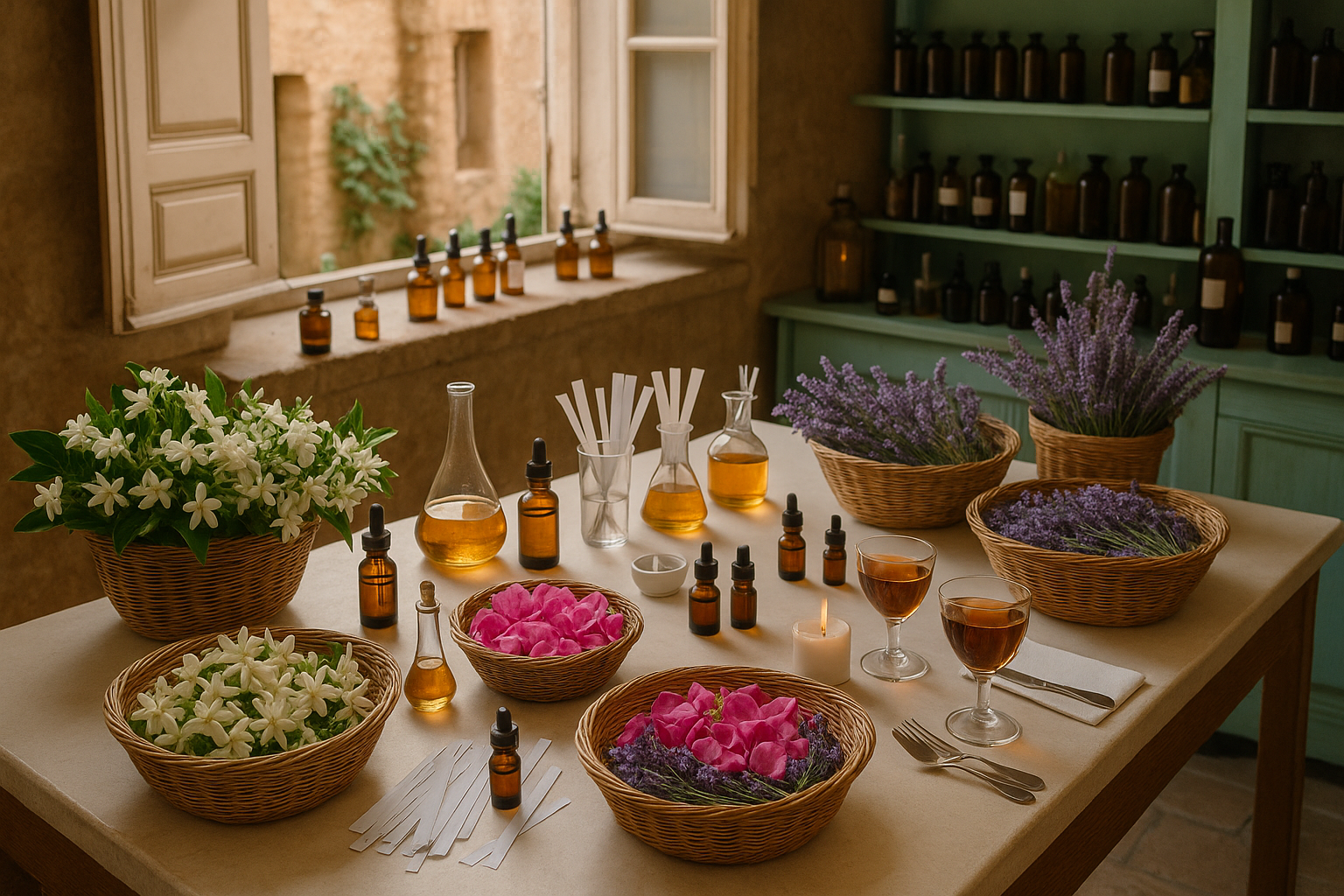
Perfume creation – Grasse or Aix-en-Provence, France
Real experiences of perfume creation in the heart of Provence
https://aventurapremium.com/creacion-perfumes-grasse-provenza/
The power of minimal stimulus
To associate is to travel without a body
https://aventurapremium.com/charlas-de-cafe/el-poder-del-estimulo-minimo/
Five aromas that awaken dormant memories
The relationship between perfume, memory, and emotion
https://aventurapremium.com/aromas-y-memoria/

 English
  Español
  Français
  Italiano